
LTO Plate Claim Requirements for Used Cars: Guide (2026)
Buying a used car is exciting, but claiming the LTO plate can be confusing if it’s still under the previous owner’s name or if you’re not sure what documents are needed. Knowing the requirements ahead of time will save you time, avoid trips to the LTO office, and ensure a smooth claim process.
This guide explains exactly what you need to claim an LTO plate for a used car.
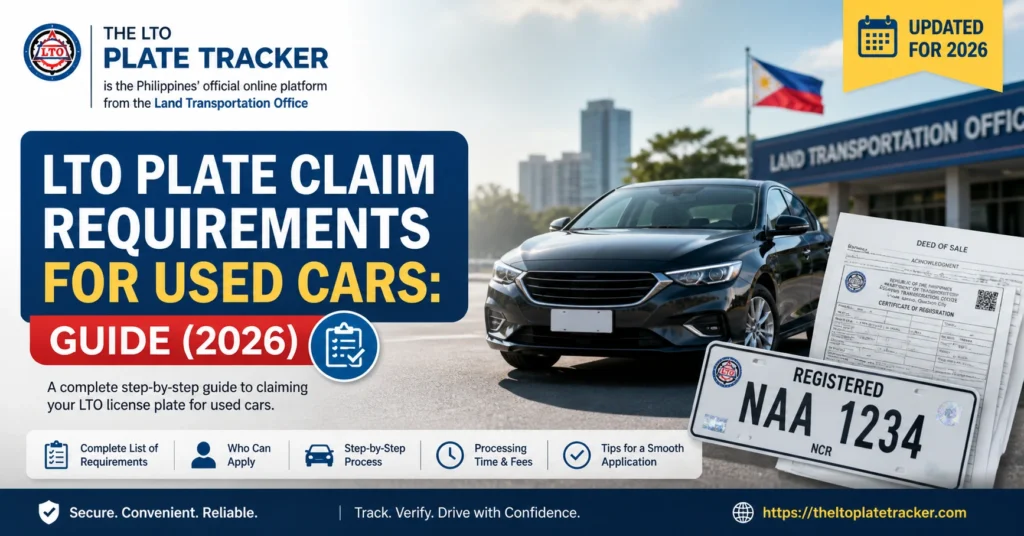
Why Plate Claim Requirements Matter
When you purchase a used car, the ownership transfer may not yet be updated in the LTO system. Until the transfer is processed:
Understanding the requirements ensures your claim is successful.
You can also read: LTO Plate Number Not Found? Causes and Fixes Update (2026)
Required Documents for Claiming a Plate on a Used Car
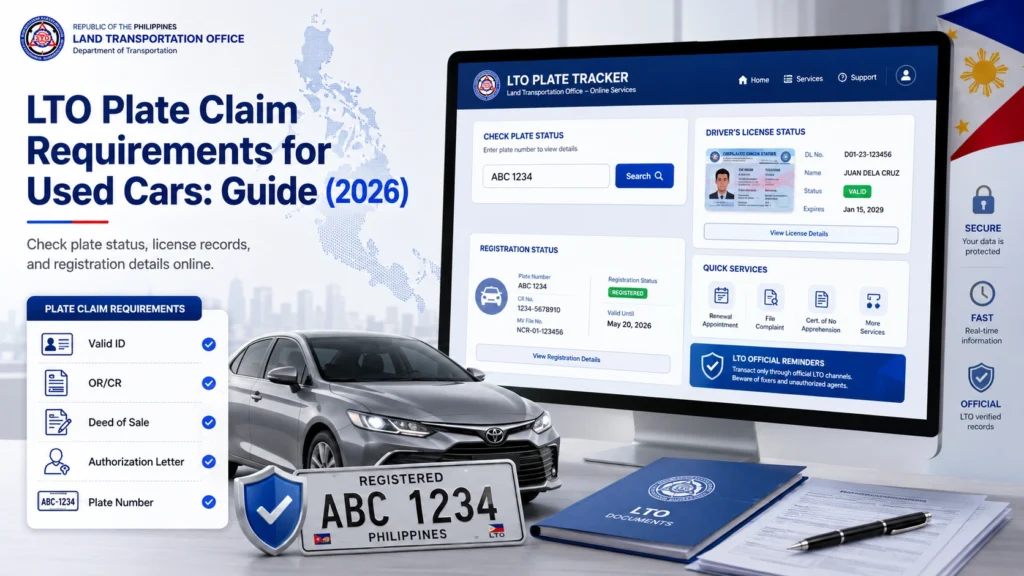
To claim your LTO plate for a used car, you generally need the following:
Original Certificate of Registration (CR) and Official Receipt (OR)
These documents show the car is legally registered and provide the MV File Number for verification.
Deed of Sale or Transfer of Ownership
A notarized deed of sale proves the vehicle was sold or transferred to you.
Authorization Letter (if applicable)
If you are claiming the plate on behalf of the new owner or cannot appear in person, an authorization letter from the previous owner is required.
Valid IDs
Both your ID and the previous owner’s ID may be required for verification.
LTO Processing Fees (if applicable)
Any transfer or release fees required by the LTO branch.
Steps to Claim Your Used Car Plate
Follow these steps to successfully claim your plate:
Verify Ownership Transfer
Make sure the transfer of ownership has been submitted to LTO and is under processing. Without this, the LTO may not release the plate.
Check the LTO Tracker
Enter your MV File Number, OR, or plate number to see if the plate is ready for pickup or delivery.
Prepare All Required Documents
Gather your CR, OR, deed of sale, authorization letter (if needed), and valid IDs.
Visit the LTO Branch
Go to the designated branch. Submit your documents and inform them that you are claiming a plate for a used car.
Claim the Plate
Once verified, the LTO will release the plate to you. Make sure the details on the plate and documents match your records before leaving.
Common Issues When Claiming Used Car Plates
Plate Not Found in LTO Tracker
This usually occurs if the ownership transfer is still processing. Wait a few business days or follow up with your branch.
Previous Owner Not Available
You will need an authorization letter if the previous owner cannot accompany you.
Discrepancies in Records
If the LTO record differs from your documents, request verification and present your OR/CR and deed of sale.
Delayed Delivery
If you opted for delivery, courier services may take a few extra days. Track your delivery reference number or visit the branch for follow-up.
Tips for a Smooth Claim
FAQs
Conclusion
Claiming an LTO plate for a used car is straightforward if you have the right documents and follow the proper steps. Always ensure the ownership transfer is complete, gather all required documents, and verify the details with the LTO branch.
By preparing ahead and following these guidelines, you can claim your plate quickly and avoid unnecessary delays.


