
LTO Plate Delivery Delay: When to Follow Up Update (2026)
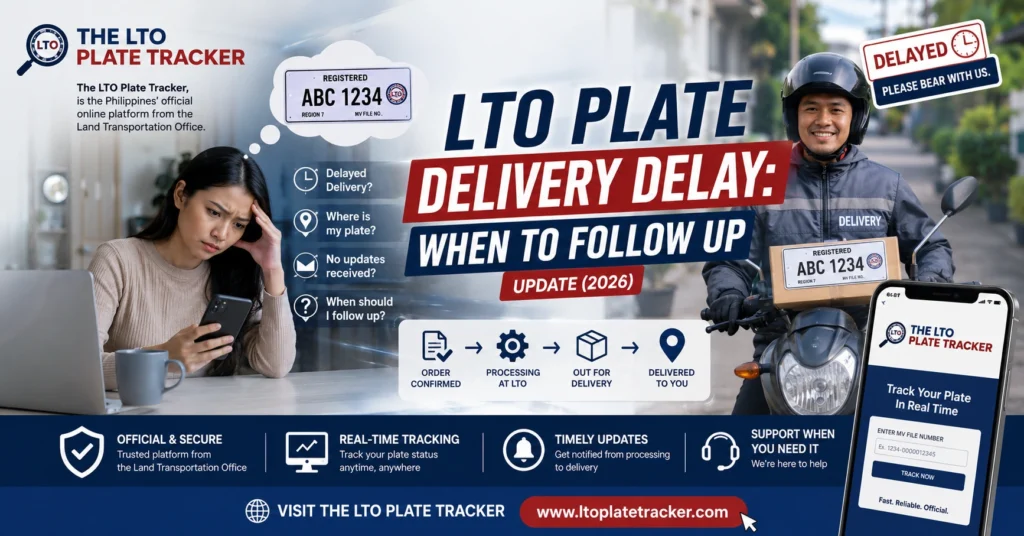
Waiting for your LTO plate can be exciting, but delays are common. Whether you bought a new or second-hand vehicle, the plate delivery process sometimes takes longer than expected.
This guide will help you understand why deliveries are delayed and when it’s appropriate to follow up with LTO or the courier.
Why LTO Plate Delivery Can Be Delayed
Several factors can cause delays in receiving your plate:
System Processing Time
After your vehicle registration or ownership transfer, it takes time for LTO to process your documents and prepare the plate for delivery.
High Volume of Orders
During peak seasons, such as registration renewals or holiday periods, the volume of plates being processed can slow down deliveries.
Courier or Delivery Issues
If you chose courier delivery, the shipping company may experience delays due to route, workload, or logistical problems.
Incomplete or Incorrect Documents
Plates may be held back if the documents submitted during registration or transfer are incomplete or have errors.
Regional Processing Delays
Some LTO branches may update the system slower than others, causing delays in the online status reflected in the LTO Tracker.
You can also read: LTO Tracker Payment Successful but Pending: What to Do (2026)
How to Track Your LTO Plate Delivery
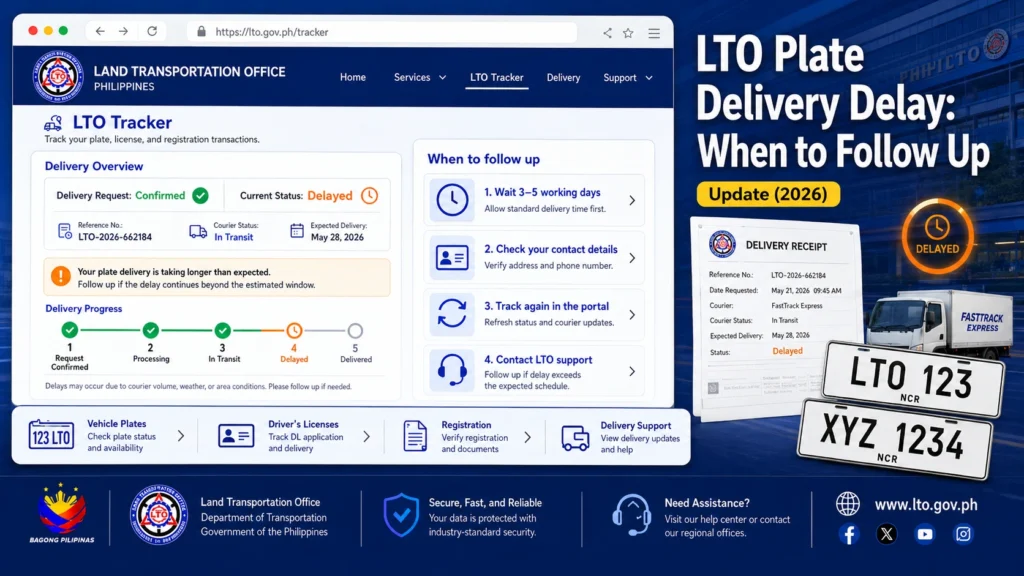
Enter your MV File Number, OR/CR, or plate number to check your delivery status. Statuses like Dispatched, Received, or Available indicate where your plate is in the process.
If using courier delivery, keep your reference number to track the shipment.
Delivery times vary depending on location and courier service. Typically, it takes a few days to one week for urban areas and longer for remote locations.
When to Follow Up With LTO or Courier
You should consider following up if:
Tip: Keep a copy of your OR/CR and tracker screenshot to make the follow-up easier.
Steps to Follow Up
Contact the Courier
Ask for updates using your delivery reference number. Sometimes the delay is with the shipping service, not the LTO.
Contact the LTO Branch
If the courier cannot provide a solution, reach out to the LTO branch where your registration or plate request was processed.
Bring Required Documents
Have your OR/CR, valid ID, and tracker screenshot ready to speed up verification.
Request Escalation
If delays continue, ask the LTO branch to escalate your request to ensure prompt delivery.
Tips to Avoid Delivery Delays in the Future
FAQs
Conclusion
Plate delivery delays are common, but knowing when and how to follow up can save time and reduce frustration. By tracking your plate, contacting the courier, and coordinating with LTO when needed, you can ensure your plate is delivered correctly and on time.
Always keep your documents ready, check the tracker regularly, and follow up if the expected delivery period has passed. Patience combined with proper follow-up is the key to receiving your LTO plate without unnecessary hassle.


