
LTO Plate Release Timeline in the Philippines Update (2026)
Waiting for your LTO license plates can be confusing. Some people get them quickly, others wait longer than expected. But the good news is that the Land Transportation Office (LTO) has made big improvements to speed up plate release in recent years. This article explains how long the process usually takes, why delays still happen, and what you should expect when tracking your plate online.
What Plate Release Means
When you register a vehicle with the LTO, the system assigns a plate number. This number becomes part of your Official Receipt (OR) and Certificate of Registration (CR). But assigning a plate number in the system and producing the physical plate are two different steps.
A plate is considered “released” when the physical plate is ready for pickup at the LTO office or dispatched to you for delivery.
You can also read: LTO Plate Produced but Still Not Available: Fix Guide (2026)
Official Timeline for New Vehicles
In the past, vehicle owners waited weeks—even months—for plates. But in 2025, the LTO and the Department of Transportation (DOTr) introduced a new system to address this long‑standing issue.
Same‑Day Plate Release for Brand‑New Vehicles
Starting October 15, 2025, the LTO implemented a policy that requires same‑day release of OR, CR, and license plates for brand‑new vehicles purchased from dealers. Under this system:
This means buyers of brand‑new cars and motorcycles no longer wait weeks for plates — they should receive them on the same day of purchase.
Typical Timeline for Plate Production and Release
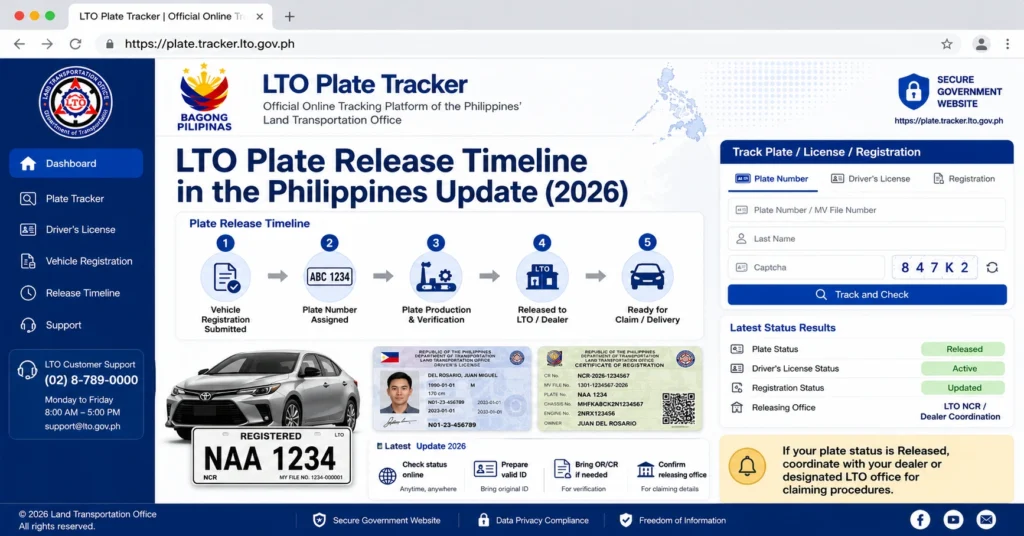
If your vehicle is not a brand‑new purchase through a dealer, or if you didn’t get your plates immediately, here’s the general timeline many drivers experience:
| Step | Estimated Time | Notes |
|---|---|---|
| Plate assigned in system | Immediately after registration accepted | Plate number is linked to your OR/CR |
| Plate printed/produced | 1–5 business days | Depends on branch workload |
| Available for pickup at LTO office | 2–7 business days | If you choose pickup |
| Ready for delivery | 3–10 business days | Courier dispatch timing |
| Home delivery completed | 5–28 business days | Varies by location and courier |
These time frames are based on typical timelines reported by motorists and official update routines.
Why Some Plates Take Longer
Even with new policies, delays can still happen. Common causes include:
Production and Distribution Workload
The LTO prints plates in batches. Even though the huge backlog (millions of plates) was cleared in 2025, occasional high volumes at certain district offices can still cause slower movement.
Courier Delivery Schedules
Home delivery depends on third‑party couriers. If the plate is marked “Ready for Delivery” but stuck with the courier, updates may lag, and delivery can take longer in distant provinces.
Tracker and System Updates
Sometimes the LTO Tracker shows a status before the physical plate is actually available or dispatched — meaning the online status can appear confusing while backend updates happen.
Dealer Follow‑Up Issues
If a dealer handled your registration, they may need to pick up the plate from the LTO office before giving it to you. Sometimes communication delays on the dealer’s side lead to longer waits.
What the Tracker Tells You
The LTO Tracker shows messages such as:
If the status doesn’t change for several days, regular follow‑up with the LTO office or dealer is recommended.
Legal Status While Waiting
Your vehicle is legally registered as soon as the OR and CR are issued, even if the physical plate isn’t delivered yet. You may use a temporary plate (following LTO rules) or carry your OR/CR when driving until the official plate arrives.
Tips to Speed Up the Process
FAQs
Conclusion
Understanding the LTO Plate Release Timeline in the Philippines helps you stay informed and avoid unnecessary stress. Thanks to newer policies, brand‑new vehicles now get plates faster than ever, and most delays are due to processing or delivery logistics rather than errors.
If your plate still hasn’t arrived after the expected timeframe, checking the LTO Tracker and following up with your dealer or LTO office usually helps speed things up. Keeping your OR/CR details accurate and regularly checking for updates will make the process smoother.


